はじめに:旅立つ前の前提確認
目次 Contents
- はじめに:旅立つ前の前提確認
- 聖書の基本情報
- 正典(カノン)成立の経緯
- 翻訳とテキストの伝承
- 現代において聖書が意味をもつ理由
- 結論
- 聖書 各巻の成立年表(概算)
- 聖書成立のタイムライン
- 聖書の文書分類
- 主要翻訳の影響と意義
- 聖書が現代文化・言葉・表現へ与えた影響
- 世界の言語での聖書普及データ表
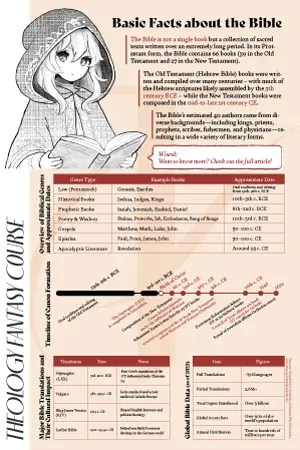
- この講座の要約資料をダウンロードできます
- Translation
- Introduction: Clarifying the Premises Before the Journey
- Basic Information about the Bible
- The Formation of the Canon
- Translations and Textual Transmission
- The Significance of the Bible Today
- Conclusion
- Download the visual summary in PDF
『聖書ファンタジー』というジャンルが成り立つためには、出発点となる「聖書そのもの」に対する共通理解が必要です。このシリーズでは概論として次の内容を整理していきます。
①聖書についての基礎知識
②聖書の取り扱い方法
③聖書ファンタジーの存在意義
④間違いと向き合う
三回にわたって聖書の基本的情報、扱ううえでの姿勢、そして「聖書ファンタジー」という表現の意味と意義を整理します。
最後は、聖書を扱うときの恐れや「間違う可能性」にどう向き合うか、さらには「最悪の想定」に対してどのような備えをしておけばよいのかを共に考えたいと思います。
今回は聖書についてのデータブックのような体裁なので、一度に覚える必要はありませんが、ブックマークしておくとよいでしょう。
聖書の基本情報
聖書 は単一の書物ではなく、長期にわたって編纂されてきた文書群の集成です。プロテスタントの聖書では、旧約(39巻)・新約(27巻)合わせて66巻、カトリックでは旧約が46巻、正教ではさらに数巻が追加され、合計73巻以上となります。
旧約聖書の成立は、紀元前2千年紀後半から紀元前5世紀頃 におよび、ヘブライ語やアラム語で記録されました。一方、新約聖書の成立は、紀元後1世紀(約50–100年) 頃となります。
執筆者たちは、王、祭司、預言者、書記、漁師、医師など、当時の様々な身分や背景をもつ約40名とされ、文書の種類も豊富です。
- 律法(例:『出エジプト記』)
- 歴史書(例:『列王記』、『サムエル記』)
- 預言書(例:『イザヤ書』、『エレミヤ書』)
- 詩文・知恵文学(例:『詩篇』、『箴言』、『ヨブ記』)
- 福音書(『マタイ』、『マルコ』など)
- 書簡(『ローマ人への手紙』など)
- 黙示文学(『ダニエル書』、『ヨハネの黙示録』)
これらの文書の大半が、複数のジャンルを組み合わせていることも特徴です。
正典(カノン)成立の経緯
カノン(正典) は、神聖で権威ある文書のリストを指します。成立の過程は一朝一夕ではなく、ユダヤ・キリスト教の共同体の中で、長い時間をかけて行われました。
旧約聖書の成立
ヘブライ語聖書(タナハ)は、紀元前2世紀頃 までには現在の24巻(プロテスタントの39巻と同内容)がほぼ固まり、1世紀後半〜2世紀頃 にユダヤ共同体でその範囲が確立したと考えられています。ヤムニア(ヤブネ)でのラビたちの論議(約90年頃)は、カノンを確定したものというより、論争があった書物(『伝道の書』や『雅歌』など)の扱いを整理したものとされます。
一方、『七十人訳聖書』(LXX) は、紀元前3世紀から1世紀にかけて、アレクサンドリアでヘブライ語からギリシア語へと翻訳され、後期ユダヤ文書(『トビト』、『ユディト』など)も多数含めていました。このLXXが後のキリスト教旧約聖書となり、カトリック・正教で「第二正典」(旧約続編)となります。一方、プロテスタントはヘブライ語のみを旧約聖書として扱いました。
新約聖書の成立
新約聖書27巻の成立も、同様に数世紀を経て進みました。
- 1世紀後半:『福音書』や『使徒行伝』、パウロの『書簡』などが成立。
- 2世紀:『マルキオン』による独自の「正典」が登場したことが、正典確立の刺激となる。
- 3世紀:『ヘブライ人への手紙』や『ヤコブの手紙』などの受容が進行。
- 4世紀:アレクサンドリアのアタナシウスの『復活祭の手紙』(367年)で、現行の27巻が明示され、ローマ、ヒッポ、カルタゴの公会議で承認。
- 5世紀:東西教会で27巻の新約聖書が共通となる。
正典の決定基準 は次の通りです:
- 使徒性:使徒自身、またその関係者の著作であること
- 正統性:「信仰の規範」に合致していること
- 普遍性:様々な地域の教会で受容され、礼拝で読まれていること
プロテスタント、カトリック、正教の違いは主に旧約聖書の巻数(正典/続編)となり、16世紀の宗教改革で再び明確となりました。
翻訳とテキストの伝承
歴史を通して、聖書のテキストは様々な言語へと翻訳され、多様な文化や文学に影響を与えています。
七十人訳聖書(LXX)
紀元前3世紀〜2世紀 にアレクサンドリアで編纂され、旧約聖書の文書群をギリシア語へ翻訳。新約聖書で引用される旧約の大半がLXXからとなっています。キリスト教成立期、地中海世界での共通語となり、後のキリスト教神学・礼拝・文学の言語的源となりました。
ウルガタ
4世紀後半〜5世紀初頭、ヒエロニムス(エウセビウス・ヒエロニュムス)によるラテン語訳。旧約をヘブライ語から、新約をギリシア語から翻訳。以後1000年以上、カトリック世界で『聖書』そのものとなり、後の中世神学、文学、絵画、建築など、多様な文化表現の源となります。
欽定訳聖書(KJV)
1611年、英国王ジェームズ1世の命で、54名の学者たちが編纂した英語聖書。旧約はヘブライ語、新約はギリシア語から翻訳され、当時の文学的豊穣性を反映した名文となり、後の数世紀、英語圏のプロテスタントで事実上の標準となりました。
その他、マルティン・ルターによる『ルター訳聖書』(1522–1534年)は、後のドイツ語の発展と印刷技術の普及に大きな影響を及ぼし、現代でも「古典的テキスト」として重要視され続けています。
現代において聖書が意味をもつ理由
1. 世界で最も売れている本
推定発行部数50億冊以上(単行・部分訳を含む)。世界中の多数の言語で読まれ、印刷・デジタルを通して常に読者を獲得しています。
2. 文学・政治・哲学・大衆文化への影響
『神曲』(ダンテ)、『失楽園』(ミルトン)、『東のエデン』(スタインベック)など、多数の文学作品が聖書から着想を得ています。
『マルティン・ルーサー・キング牧師』など、政治家・活動家の思想や言葉も聖書が源となっています。
3. 世界で最も引用されるテキスト
「善きサマリア人」「ダビデとゴリアテ」「目から鱗」など、多様な表現が聖書から生まれ、文化・言語の一部となっています。
4. 矛盾|読まれたことがないのに影響力をもっている
一方で、世界的ベストセラーであるものの、読者の多数がその内容を通読していないという逆説も存在します。例えば、アメリカの世論調査によれば、約9割の世帯が聖書を所有している一方、約半数の人々がまともに読んでいないことが明らかとなっています。これが、文学、政治、映画など、多様な文脈で引用されながら、テキストそのものへの関心が薄いという現代の姿を映し出しています。
5. NLPのサンプルテキストとしての利用
自然言語処理(Natural Language Processing)の分野で、パブリックドメインの聖書テキストが利用され、論文化される例も増えています。主に比較宗教学の分野や、属人的な手法に頼ってきた聖書の分析で成果を上げています。
結論
聖書 は単なる「信仰の書」にとどまりません。古代から現代へ、言葉、文学、哲学、法律、政治、アート、ポップカルチャー、さらには現代のテクノロジーに至るまで、多様な影響を及ぼしてきた、人類の文化的遺産です。
その成立、伝承、受容の歴史を知ることは、単なる歴史や文学への関心だけでなく、現代社会の価値、対立、共通理解 を再発見する鍵となります。
【ここまでの参考資料】
- Coogan, M. D. A Brief Introduction to the Old Testament: The Hebrew Bible in Its Context
- Britannica, “When was the Bible written?”
- Christianity.org.uk, “The History of the Bible”
- Wikipedia, “Development of the New Testament Canon”
- Britannica, “Biblical Literature”
- Guinness World Records/Gutenberg Bible史料
- WGBH News, “Most Households Own a Bible” など
聖書 各巻の成立年表(概算)
| 巻の種類 | 書名例 | おおよその成立年 |
| 律法(モーセ五書) | 創世記、出エジプト記など | 紀元前15〜5世紀の伝承・編集 |
| 歴史書 | ヨシュア記、士師記、列王記など | 紀元前9〜5世紀 |
| 預言書 | イザヤ、エレミヤ、エゼキエル、ダニエル | 紀元前8〜2世紀 |
| 詩文・知恵文学 | 詩篇、箴言、ヨブ記、伝道の書、雅歌 | 紀元前10〜3世紀 |
| 福音書 | マタイ、マルコ、ルカ、ヨハネ | 紀元後60–100年 |
| 書簡 | パウロ、ペテロ、ヤコブ、ヨハネ書など | 紀元後50–100年 |
| 黙示文学 | ヨハネの黙示録 | 紀元後95年頃 |
聖書成立のタイムライン
| 時代 | 出来事 |
| 紀元前2千年後半~5世紀頃 | 旧約聖書:律法、歴史、詩文、預言などの文書が編纂される |
| 紀元前3世紀~1世紀 | アレクサンドリアで七十人訳聖書 (LXX) 完成 |
| 紀元後1世紀 | 新約聖書の文書が成立 (約50–100年) |
| 2世紀 | マルキオンの影響で、正典の検討が活発化 |
| 4世紀 | アタナシウスの『復活祭の手紙』(367年)で新約27巻が示される |
| 5世紀 | 西方・東方のキリスト教で新約27巻の共通受容が確立 |
| 16世紀 | 宗教改革:旧約正典(ヘブライ語のみ/続編を除外)を再検討、カノン論争が表面化 |
| 1546年 | トリエント公会議でカトリック正典が再確認される |
| 1672年 | エルサレム公会議で正教会のカノン確立 |
聖書の文書分類
| 分類 | 主な例 | 内容 |
| 律法 | 創世記、出エジプト記 | 戒め、規範、共同体の法律 |
| 歴史 | 列王記、サムエル記 | 民族の歴史、王国の興亡、人物伝 |
| 預言 | イザヤ、エレミヤ、ダニエル | 預言、神の意志、未来への警告・約束 |
| 詩文・知恵文学 | 詩篇、箴言、ヨブ記、雅歌 | 頌歌、人生の意味、神への応答、人生の知恵 |
| 福音書 | マタイ、マルコ、ルカ、ヨハネ | イエスの生涯、言葉、活動 |
| 書簡 | パウロ、ペテロ、ヤコブなど | 教え、共同体の指導、論争への応答 |
| 黙示文学 | ヨハネの黙示録、ダニエル | 終末論、象徴的表現、勝利への希望 |
主要翻訳の影響と意義
| 翻訳 | 完成年代 | 影響・特徴 |
| 七十人訳聖書 (LXX) | 紀元前3世紀–1世紀 | ギリシア語圏で旧約聖書の普及/新約から頻繁に引用される |
| ウルガタ | 382–405年 | ラテン語での共通聖書となり、中世の神学・文学・建築・美術へ影響 |
| 欽定訳聖書 (KJV) | 1611年 | 英語文学、社会、政治、文化への影響が大きい。『神曲』など多数の文学へ影響 |
| ルター訳聖書 | 1522–1534年 | ドイツ語の発展、印刷技術、識字率向上、プロテスタント思想への影響 |
聖書が現代文化・言葉・表現へ与えた影響
現代映画・ゲーム・漫画への影響
- 映画
- 『十戒』(1956年):旧約の出エジプト記を描く大作
- 『ベン・ハー』(1959年):キリスト時代を背景とした叙事詩
- 『パッション』(2004年):キリストの受難をリアルに再現
- 『スター・ウォーズ』の善悪・救済概念
- 『マトリックス』(1999年):メシア概念、救済、黙示録的テーマ
- 文学
- 『神曲』(ダンテ):地獄・煉獄・天国の旅
- 『失楽園』(ミルトン):堕落と救済の叙事詩
- 『エデンの東』(スタインベック):カインとアベルの再解釈
- 『老人と海』(ヘミングウェイ):旧約の「ヨブ記」に通じる苦難と救済のテーマ
- アート
- ミケランジェロ『アダムの創造』:旧約『創世記』のビジュアル化
- レオナルド・ダ・ヴィンチ『最後の晩餐』:新約『マタイ』からの重要場面
- ピーター・パウル・ルーベンス『キリスト降架』:受難と復活のテーマ
- ゲーム:『ゼルダの伝説』や『ファイナルファンタジー』での神話的ストーリーテリング
- 漫画・アニメ:『エヴァンゲリオン』など、黙示録や救世主テーマの引用
現代音楽・ポップカルチャーへの影響
- 「ハレルヤ」(聖歌から派生した多数のヒットソング)
- マドンナ『ライク・ア・プレイヤー』(キリスト教的意匠をポップへ融合したヒット曲)
- 「エデンの園」(映画・小説・広告など、理想郷の表現として頻出)
- 「黙示録」(映画、コミック、ロック、ヒップホップでの大テーマ)
- ファッション/広告:十字架、天使、蛇など、聖書のモチーフがブランドロゴや広告デザインで活用され、多様性が強調される
現代思想・社会運動への影響
- 公民権運動(マルティン・ルーサー・キング牧師の引用)
- 現代ヒューマニズム、慈善運動、平和運動の原型となる概念
- 現代の広告キャンペーンやファッションブランド(例:クロスモチーフ、エンジェルモチーフなど)での表現例
世界の言語での聖書普及データ表
| 項目 | データ |
| 完全翻訳言語数 | 約 736 言語(2023年) |
| 部分的翻訳言語数 | 3,665 以上 |
| 世界での発行部数 | 50 億冊以上 |
| 世界の識字人口比 | 90%以上の人口がアクセス可能 |
| 毎年の配布数 | 数千万~数億冊 |
※ データ出典: United Bible Societies、Guinness World Records、その他公表資料
「聖書」というテキストは、単なる一冊の書ではなく、数千年の歴史、複数の伝統、様々な文体、豊かな文化的影響から成り立つ、真の意味での文化遺産なのです。
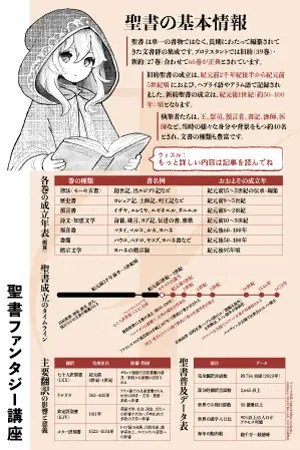
この講座の要約資料をダウンロードできます
PDFは日本語と英語の2ページです。画像は見本です。
【参考文献・資料例】
- Coogan, M. D. (2009). A Brief Introduction to the Old Testament: The Hebrew Bible in Its Context.
- Britannica – “When was the Bible written?”、”Biblical Literature”など
- Christianity.org.uk – “The History of the Bible”
- The Development of the New Testament Canon (Wikipedia)
- Guinness World Records – The Bible as the best-selling book of all time
- WGBH News – アメリカでの聖書の読書・所有状況調査データ
- Mental Floss – 聖書から生まれた表現集
Translation
Introduction: Clarifying the Premises Before the Journey
For the genre of “Bible Fantasy” to be established, we must first have a shared understanding of the Bible itself as a starting point. In this series, we will review:
- The basics of the Bible
- How to approach it
- The significance of Bible Fantasy
- Facing the possibility of error
Over three installments, we’ll review basic information about the Bible, the mindset for approaching it, and the significance and meaning of “Bible Fantasy” as a form of expression.
Finally, we’ll consider how to respond to the fear of making mistakes when dealing with the Bible and how to prepare ourselves for the worst-case scenarios.
This article is meant to be like a data book about the Bible — you don’t have to memorize it all at once, but it’s worth bookmarking for future reference.
Basic Information about the Bible
The Bible is not a single book, but a collection of texts compiled over a long period. In the Protestant Bible, it contains 66 books (39 Old Testament, 27 New Testament). The Catholic Bible has 46 Old Testament books, and the Orthodox Bible includes a few more, totaling 73 or more.
The Old Testament was composed roughly between the late second millennium BCE and the fifth century BCE, mainly in Hebrew and Aramaic. The New Testament was composed in the first century CE (around 50–100 CE).
Its authors comprise roughly 40 people, ranging from kings, priests, prophets, and scribes to fishermen and physicians. The texts are varied:
- Law (e.g., Exodus)
- History (e.g., Kings, Samuel)
- Prophecy (e.g., Isaiah, Jeremiah)
- Poetry and Wisdom Literature (e.g., Psalms, Proverbs, Job)
- Gospels (e.g., Matthew, Mark)
- Epistles (e.g., Romans)
- Apocalyptic Literature (e.g., Daniel, Revelation)
Many texts also combine multiple literary styles.
The Formation of the Canon
The Canon is a list of sacred, authoritative texts. Its establishment was not instantaneous, but the result of long reflection within Jewish and Christian communities.
Formation of the Old Testament
The Hebrew Bible (Tanakh) was largely settled by roughly the second century BCE (24 books, equivalent in content to the Protestant 39), and its boundaries became largely fixed within Jewish communities by the late first–second century CE. The discussions at Yavneh (around 90 CE) were about controversies surrounding certain books (e.g., Ecclesiastes, Song of Songs) and weren’t about formal canonization.
Meanwhile, the Septuagint (LXX) was translated from Hebrew into Greek between the third and first centuries BCE in Alexandria, and included later Jewish works (e.g., Tobit, Judith). The LXX became the foundation for the Christian Old Testament and the basis for the Catholic and Orthodox “deuterocanonical” books. Meanwhile, the Protestants adhered to the Hebrew text alone.
Formation of the New Testament
The 27 books of the New Testament were also shaped over several centuries:
- Late 1st century: The Gospels, Acts, and Pauline epistles were composed.
- 2nd century: Marcion’s creation of a limited “canon” sparked the Church to formalize its own.
- 3rd century: Growing acceptance of Hebrews, James, and other contested texts.
- 4th century: Athanasius of Alexandria’s Easter Letter (367 CE) identified the 27-book New Testament. Ratification came at the Councils of Rome, Hippo, and Carthage.
- 5th century: Eastern and Western churches came to consensus on the New Testament canon.
Criteria for Canonization:
- Apostolicity: Authorship by an apostle or someone closely associated.
- Orthodoxy: Consistency with the “rule of faith” (orthodox teaching).
- Catholicity: Universal acceptance across church communities.
Differences between Protestant, Catholic, and Orthodox canons arise mainly from the Old Testament books, reaffirmed during the 16th-century Reformation.
Translations and Textual Transmission
Throughout history, biblical texts have been translated into many languages, influencing countless cultures and literatures.
- Septuagint (LXX): Created between the 3rd and 2nd centuries BCE in Alexandria, making Hebrew scripture available in Greek. The New Testament quotes it extensively, making it the foundation of early Church theology and liturgy.
- Vulgate: Created by Jerome between the late 4th and early 5th centuries from Hebrew and Greek. It shaped Catholic liturgy and inspired countless works of medieval theology, literature, art, and architecture for over a millennium.
- King James Version (KJV): Created in 1611 by 54 scholars under King James I. Its majestic early modern English shaped English-language literature and became the de facto Bible for Protestants for centuries.
- Luther Bible (1522–1534): Created by Martin Luther, it shaped the German language and inspired the printing revolution, making the Bible available to ordinary readers and cementing its role as a classic text.
The Significance of the Bible Today
- The World’s Best-selling Book: An estimated 5 billion copies have been published (in whole or in part), making the Bible the best-selling book in history.
- Literature, Politics, Philosophy, and Popular Culture: Works such as Dante’s Divine Comedy, Milton’s Paradise Lost, and Steinbeck’s East of Eden draw directly from the Bible. Figures like Martin Luther King Jr.grounded their speeches and activism in biblical ideas.
- Most Frequently Quoted Text: Expressions like “The Good Samaritan,” “David versus Goliath,” or “falling scales from the eyes” have entered everyday language across the globe.
- Paradox of Influence vs. Readership: Despite being the best-selling book, many own a Bible but have rarely read it. According to a U.S. survey, about 90% of households own a Bible, yet roughly half of people have never read it thoroughly. This paradox reflects its deep cultural resonance despite low direct engagement.
- Use in NLP and AI: The Bible, as a public-domain text, is used extensively in Natural Language Processingresearch, advancing fields like comparative religious studies and text analysis.
Conclusion
The Bible is far more than a book of faith. Its texts, shaped across millennia, have influenced language, literature, philosophy, law, politics, art, pop culture, and even technology. Understanding its composition, canonization, and translation allows readers to rediscover its role in shaping the shared ideas, tensions, and common ground of the modern world.
Disclaimer
This English translation was generated with the assistance of AI. While every effort has been made to preserve the original tone and meaning, some nuances may differ from the Japanese source. For the most accurate understanding, please refer to the original Japanese text.

Sister site
Wry Wonders is a space that illuminates the future
through both theology and storytelling, with the Millennial Kingdom as its guiding vision.
https://wrywonders.com/en/top-page/

 聖書ファンタジー講座
コメントを残す